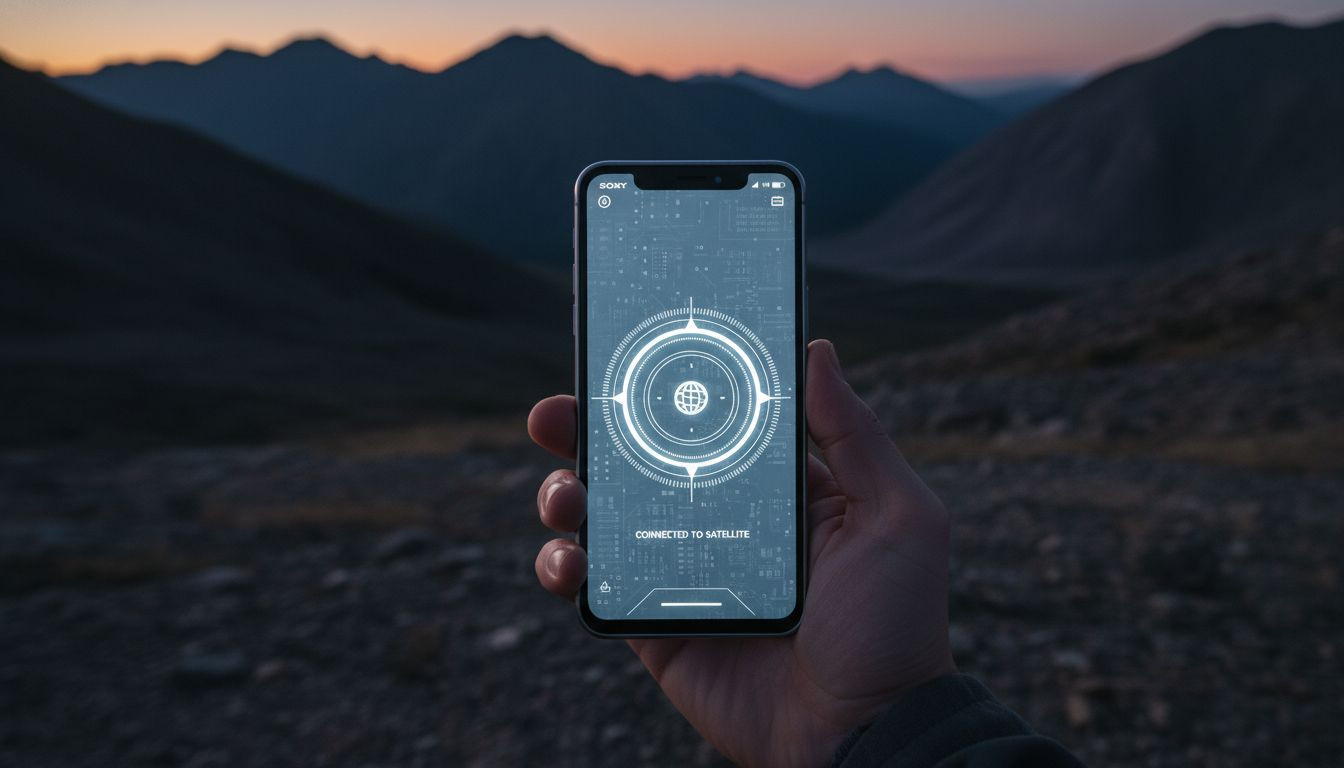
Welcome to the year 2024, where we can’t get a stable 5G signal in a mid-sized Starbucks, but Google insists we need to send emojis via a satellite orbiting 22,000 miles above the Earth. The latest Android 15 Native Satellite Messaging Leak Updates have hit the tech world with the subtlety of a software update that bricks your motherboard. Google is finally playing catch-up with Apple, trying to convince us that being stranded in the wilderness is a primary use case for a $1,000 glass rectangle. While the marketing teams are busy polishing their 'connected anywhere' slogans, we’re here to look at the cold, hard, and often disappointing code that makes this work—or doesn’t.
The Technical Guts: How Android 15 Actually Talks to Space
Let’s talk about the SatelliteManager API. In the latest developer previews of Android 15 (affectionately named 'Vanilla Ice Cream' by engineers who clearly haven't eaten a real dessert in years), we're seeing the framework for Non-Terrestrial Network (NTN) support. This isn't just a software patch; it’s a fundamental shift in how the radio interface layer (RIL) interacts with hardware. The leaked strings indicate that Android 15 will support both proprietary satellite implementations and the standardized 3GPP Release 17 NTN protocols.
For those who don't speak 'Telecommunications Nerd,' this means your phone is looking for a signal that isn't coming from a tower on a hill. It’s looking for a constellation of low-earth orbit (LEO) satellites. However, don't get your hopes up about streaming 4K Netflix from the summit of Mount Everest. We are looking at narrowband connectivity. We are talking about SMS and potentially RCS (Rich Communication Services) if Google can stop tripping over its own feet for five minutes. You can track the progress of these implementations by following the Android 15 Native Satellite Messaging Leak Updates as they emerge from the AOSP repositories.
The Modem Problem: Your Current Phone is Probably Trash
Here is the reality check: you cannot just 'download' satellite connectivity. Your current Snapdragon 8 Gen 2 or whatever mediocre silicon you’re rocking probably doesn’t have the hardware support for the specific frequency bands required for NTN. The leaks suggest that the Pixel 9 will be the first to truly showcase this feature, likely sporting the Exynos 5400 modem. This modem is rumored to support 5G NTN, allowing for a much more seamless 'native' experience than the clunky, third-party app-based solutions we've seen from Garmin or Motorola’s satellite link.

UI Leaks: The 'Point at the Sky' Mini-Game
According to leaked screenshots from the Android 15 Beta, Google is introducing a dedicated UI for satellite alignment. It’s essentially a digital compass that tells you to move your hand like a crazy person until you find a clear line of sight to a satellite. The UI includes prompts like 'Move away from trees' and 'Get a clear view of the sky.' Because, apparently, Google thinks its users don't understand how physics works. If there is a leaf between you and the vacuum of space, your 'I’m lost' text isn't going anywhere.
What’s more interesting is how Android 15 handles the handover. The system will supposedly alert you when you have 'No cellular or Wi-Fi connectivity,' and a persistent notification will offer the option to switch to satellite. It’s a reactive system, not a proactive one, which is probably for the best unless you want your battery to die in twenty minutes while the modem screams into the void searching for a satellite.
The T-Mobile and SpaceX Factor
We can't talk about these leaks without mentioning the elephant in the room: Starlink. T-Mobile has been touting its partnership with SpaceX to provide 'direct-to-cell' connectivity. The Android 15 Native Satellite Messaging Leak Updates suggest that Google is building deep-level support for T-Mobile’s implementation. This would theoretically allow users to use their existing phone numbers to send texts via satellite without a special subscription. If that actually happens without a massive 'Space Convenience Fee' tacked onto your monthly bill, I’ll eat my mechanical keyboard. History suggests we’ll be paying a premium for the privilege of texting 'I'm fine' while we're technically in a dead zone.
Privacy and the Orbital Surveillance State
One aspect the leaks haven't fully clarified—and which I find deeply suspicious—is the encryption layer. When you send a message via a satellite, it passes through infrastructure owned by companies like Starlink or Iridium before it ever hits a carrier's ground station. Android 15 claims to support end-to-end encryption for these messages, but when you're bypassing traditional cellular infrastructure, the metadata is still a goldmine. Who knows exactly where you were when you sent that 'HELP' text? Everyone with a satellite dish, that's who.

Comparison: Google vs. Apple’s 'Emergency SOS'
Apple’s 'Emergency SOS via Satellite' was a polished, restricted experience limited to... well, emergencies. Google, in its infinite wisdom (read: lack of focus), seems to be aiming for something broader. The leaks indicate that Android 15 will eventually allow for non-emergency messaging. This sounds great until you realize the bandwidth limitations. Imagine 50,000 people at a music festival trying to use satellite messaging because the local towers are jammed. The orbital congestion would be a nightmare. Apple’s restrictive approach is actually more technically sound for the current state of LEO constellations, but Google loves a good 'open' mess.
The Verdict: Do You Actually Need This?
Let’s be honest. 99% of people reading this will never be more than five miles from a Starbucks or a cell tower. We are obsessing over Android 15 Native Satellite Messaging Leak Updates because it’s a shiny new toy in a world where smartphone innovation has plateaued into 'slightly better cameras' and 'AI that hallucinates recipes.' It’s a cool piece of engineering, sure. But unless you’re a professional hiker or a survivalist with a YouTube channel, this is just another way for OEMs to justify raising the MSRP of the next flagship.
Frequently Asked Questions (FAQ)
- Will my current phone get Android 15 satellite messaging? Probably not. You need specific modem hardware (like the Exynos 5400) to support NTN frequencies. Software alone won't bridge the gap.
- Is satellite messaging free in Android 15? The OS supports it, but the service cost depends on your carrier. T-Mobile has hinted at including it in some plans, but expect others to charge.
- Can I use it for phone calls? Currently, no. The bandwidth is limited to text-based communication.
- Does it work indoors? Absolutely not. You need a clear, unobstructed view of the sky.
- Which Android 15 devices will support it first? The Pixel 9 series and potentially the next generation of Samsung Galaxy flagships are the primary candidates.
Sources
- Google Android Open Source Project (AOSP) Gerrit Code Reviews
- 3GPP Release 17 Technical Specifications for NTN
- Leaked FCC filings regarding Pixel 9 modem capabilities
- SpaceX Starlink Direct-to-Cell technical whitepapers